Hotel notebooks
Aman Kyoto, the art of silence
Twenty-six rooms hidden in a forgotten forest at the foot of Mount Hidari Daimonji. A retreat more than a hotel.
When to go
March to April, or October to November
Ideal length
3 to 4 nights
Suggested budget
From $3,000 per night
Who is it for?
Travelers who no longer need to be entertained
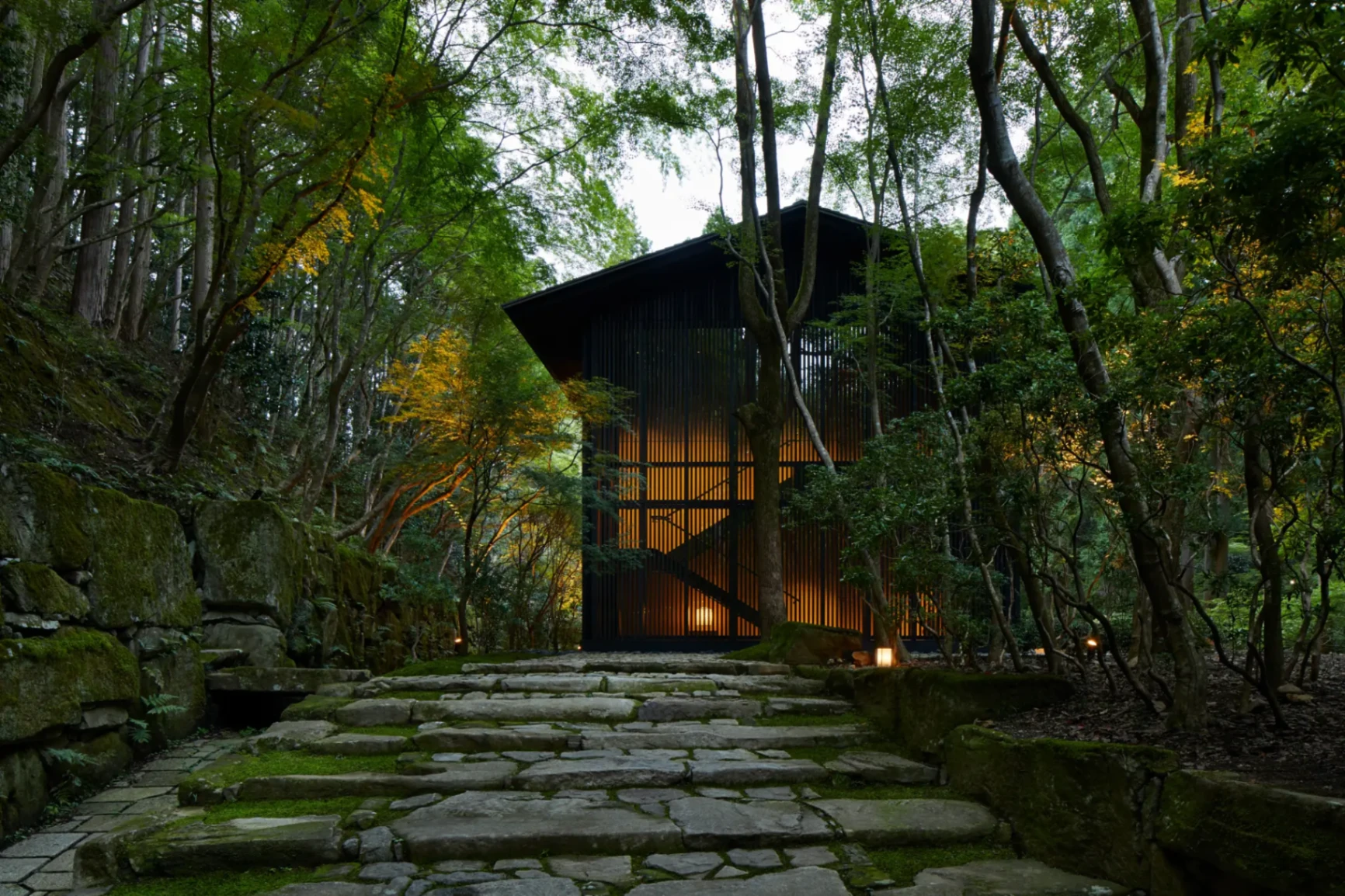
Aman Kyoto sits in the Takagamine district, about thirty minutes from Kyoto station. This is old ground in Japanese history: some four centuries ago, the artist Honami Koetsu founded a community here that would later give rise to the Rinpa school of painting. The garden itself has a story of its own: it was designed for a textile museum, then left untouched for years, until moss covered every stone.
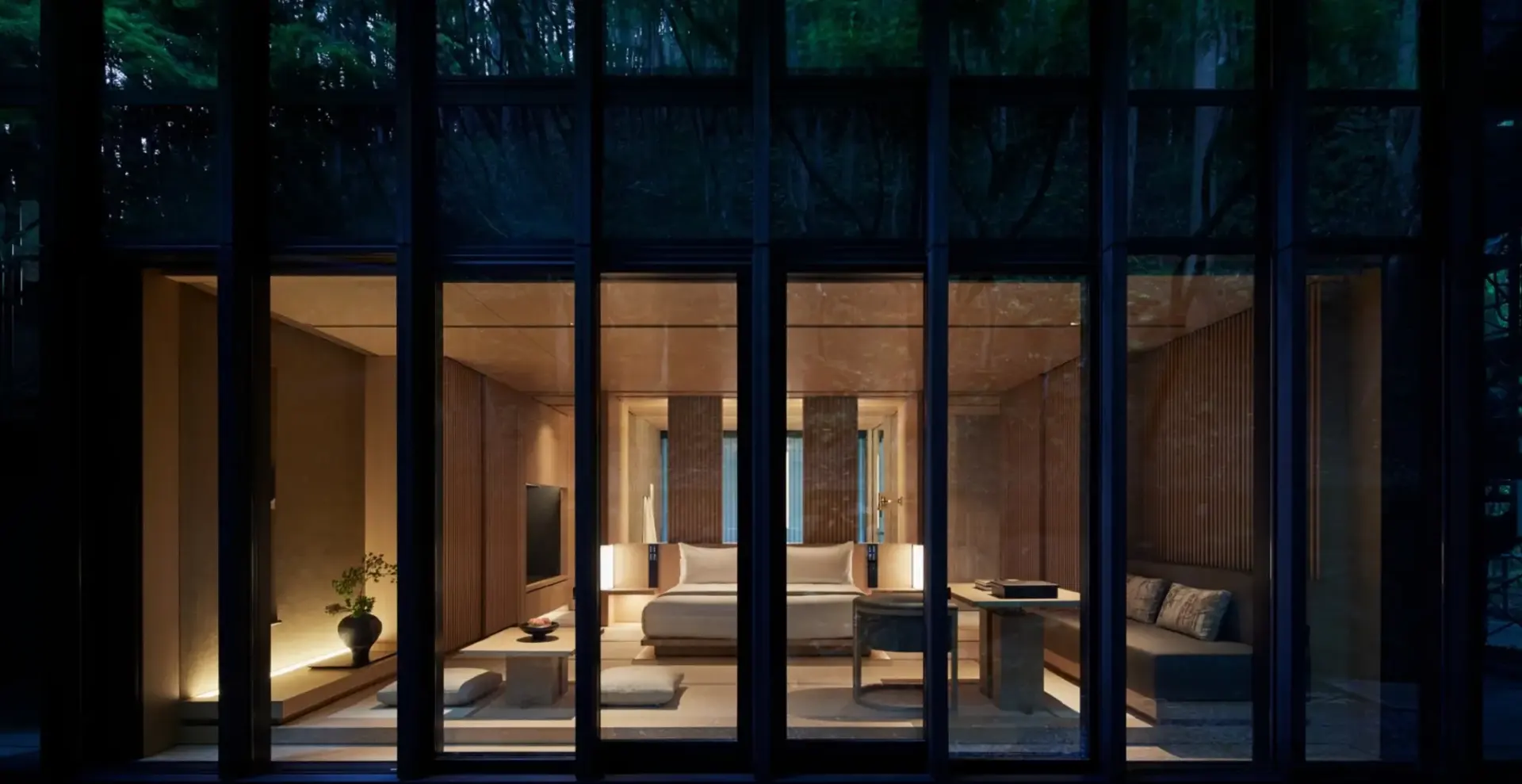
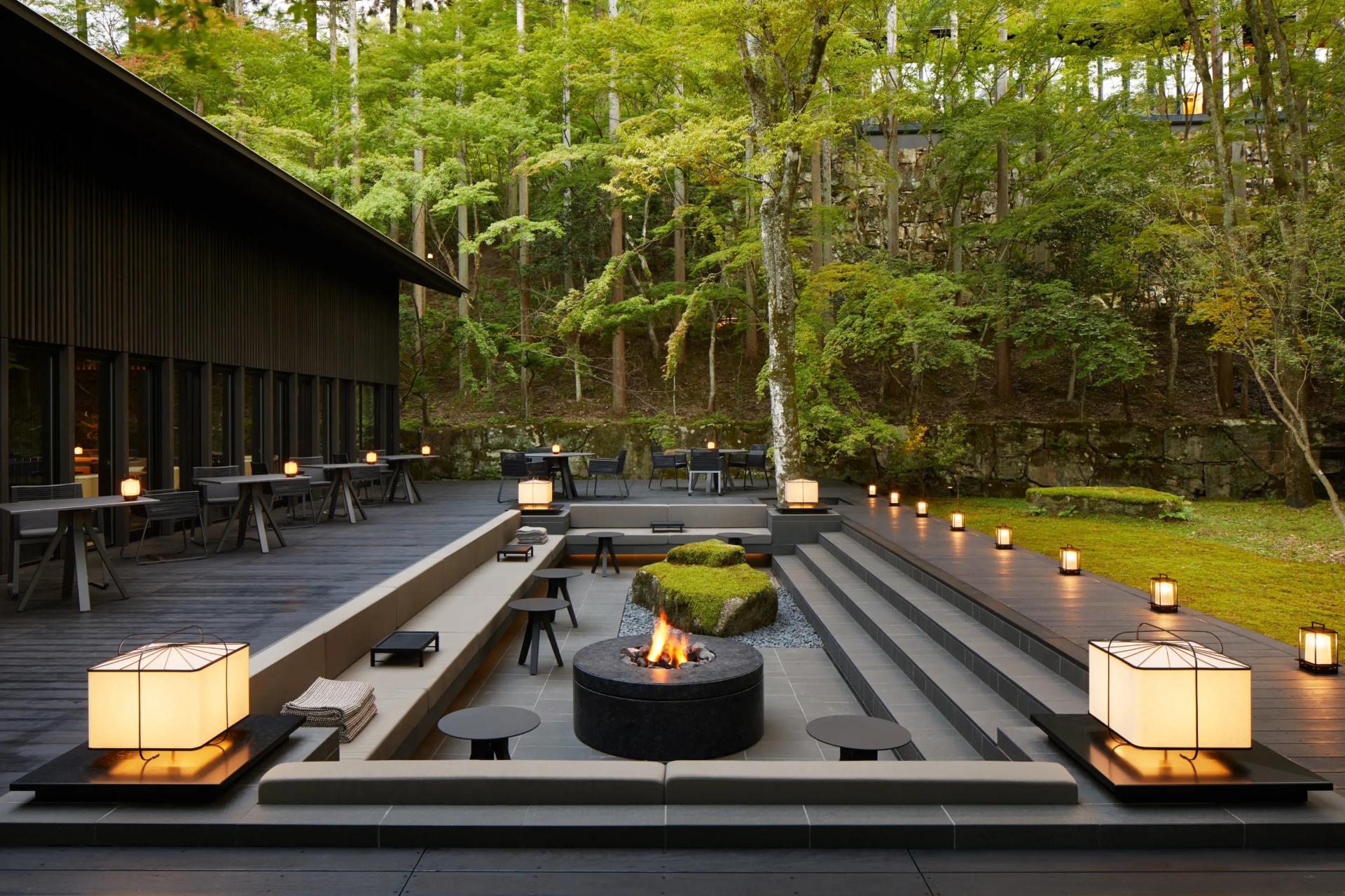
When the teams came to build the hotel, under the direction of architect Kerry Hill, they laid temporary metal walkways above the paths for the duration of the works, so as not to crush the moss that had taken so long to settle. The result: six pavilions scattered among the maples and cedars, as if they had always been there.
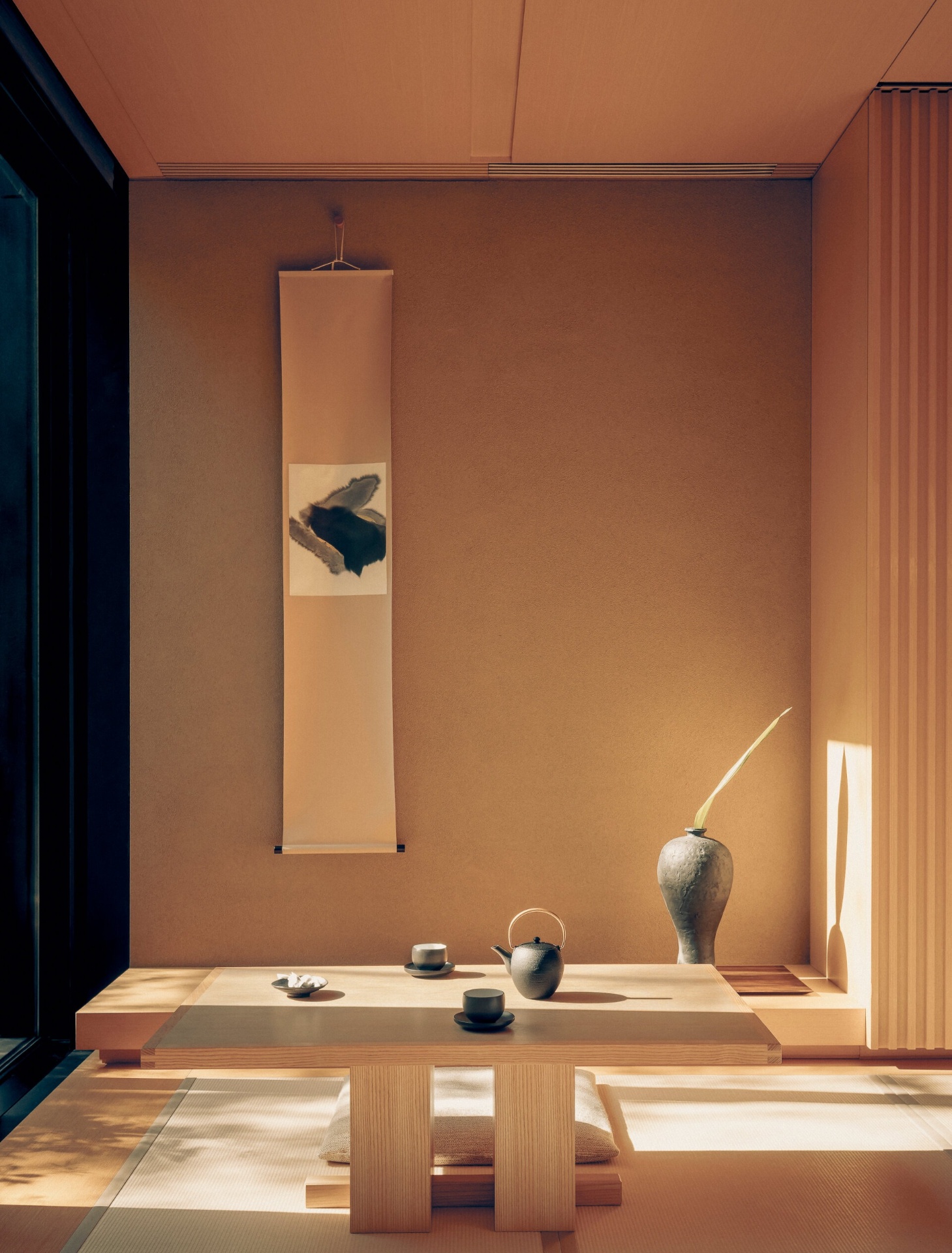
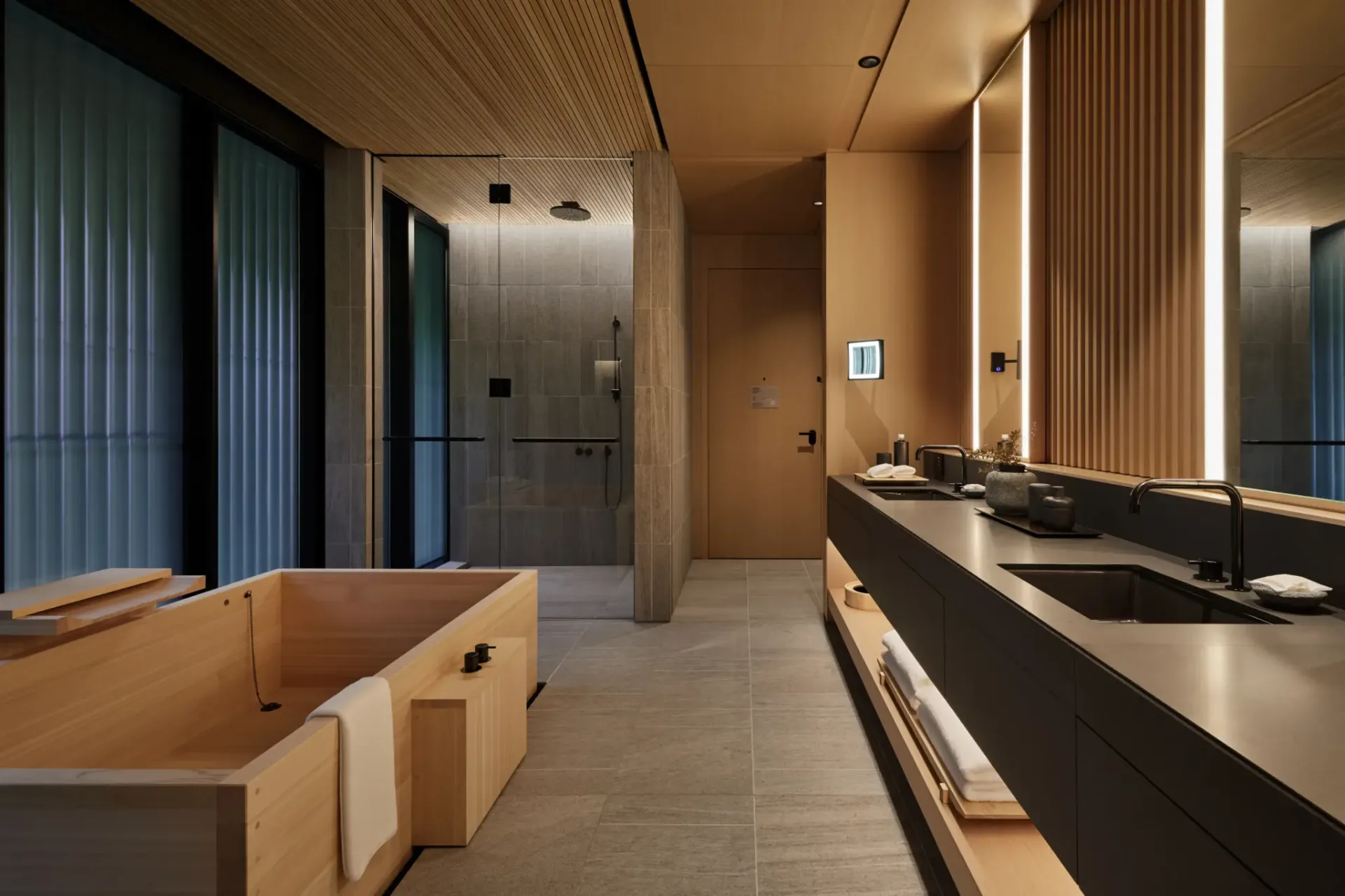
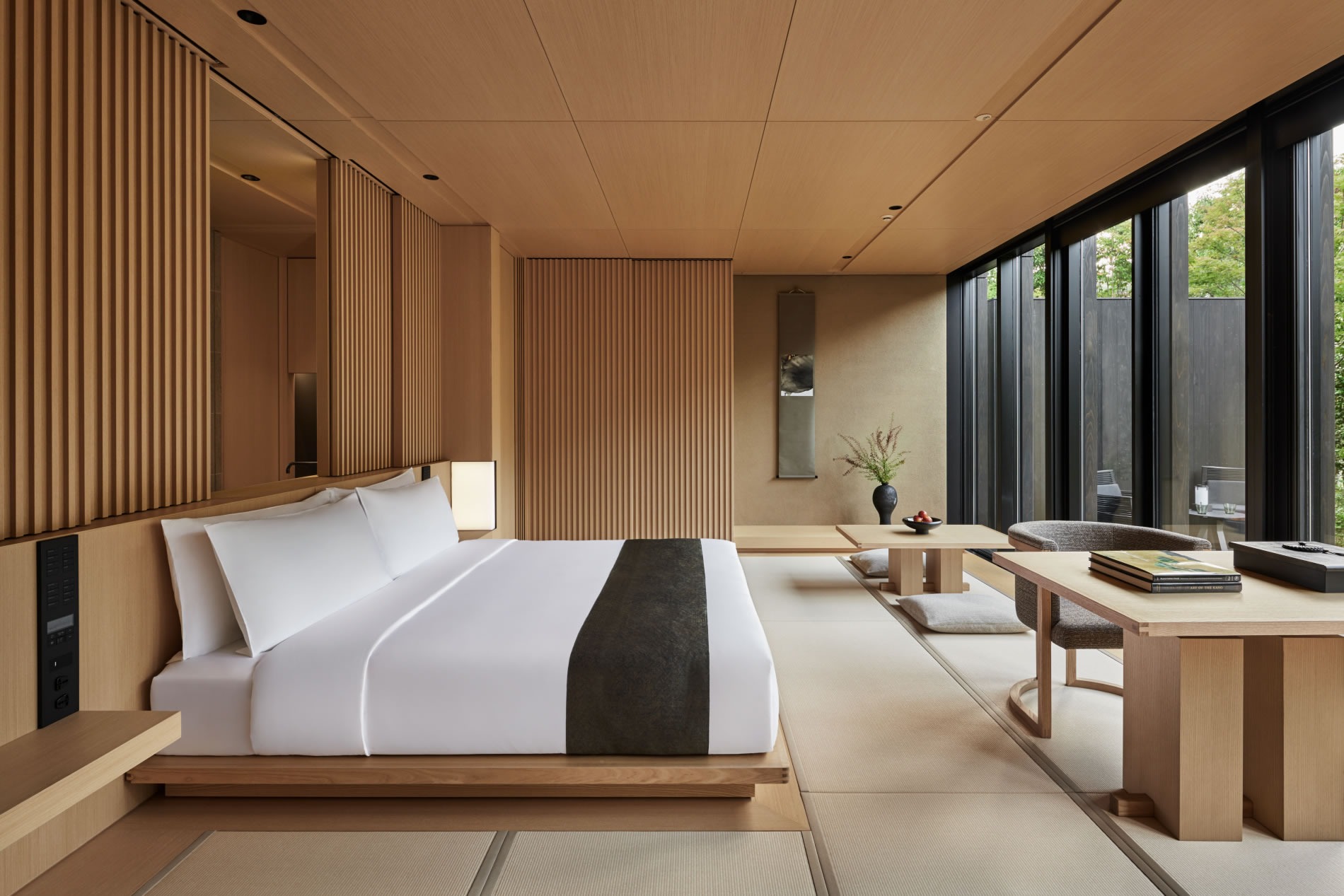
The rooms, minimalist in tatami and pale wood, open onto the forest through wide bays. Each one has its own onsen, fed by a natural hot spring.
« You are not visiting a Japanese garden groomed for the occasion, you are living in a forest that has simply agreed to let you stay. »
What truly sets Aman Kyoto apart is this reversed relationship between the built and the living. Most hotels of this standing commission a garden to match their architecture. Here, the architecture bent to a garden that was already there, older than the project itself, and that was protected rather than redrawn. The result is like no other address in the city: you are not visiting a Japanese garden groomed for the occasion, you are living in a forest that has simply agreed to let you stay.
Only twenty-six rooms, in a city where most large properties count several hundred: that is what keeps the place quiet even in high season. It is also what explains its recent recognition by the Michelin Guide, which awarded it Two Keys, the highest distinction for a hotel, despite a location thirty minutes from the historic center that many would consider, elsewhere, a handicap.
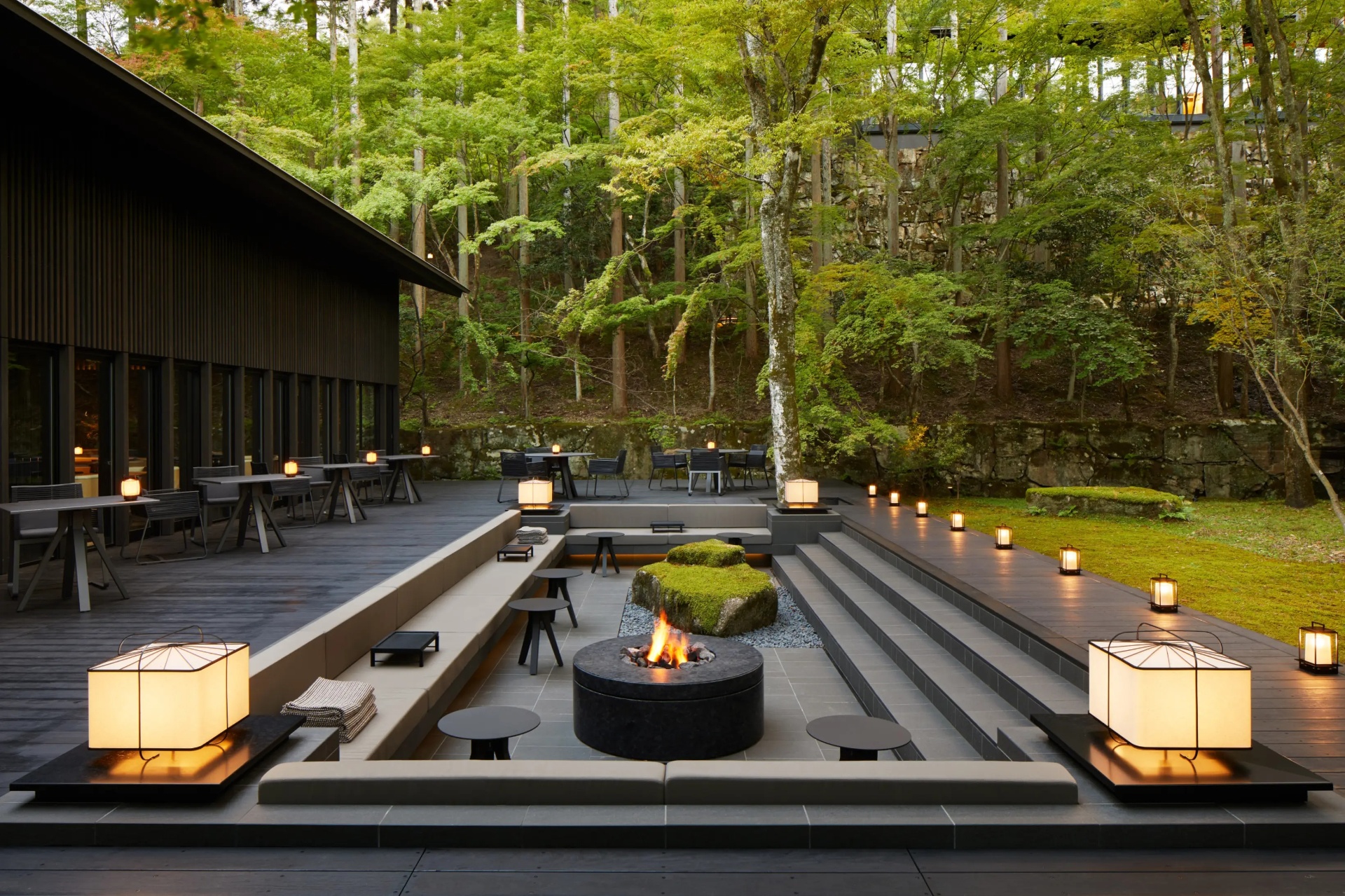
The Taka-An restaurant pays tribute to Honami Koetsu in its own way: kaiseki cuisine built around the seasons, with rice from the Tango region, vegetables from Kamigamo, and eggs from a small farm in Ohara. The Living Pavilion, more informal, serves Western and local dishes around a central fireplace.
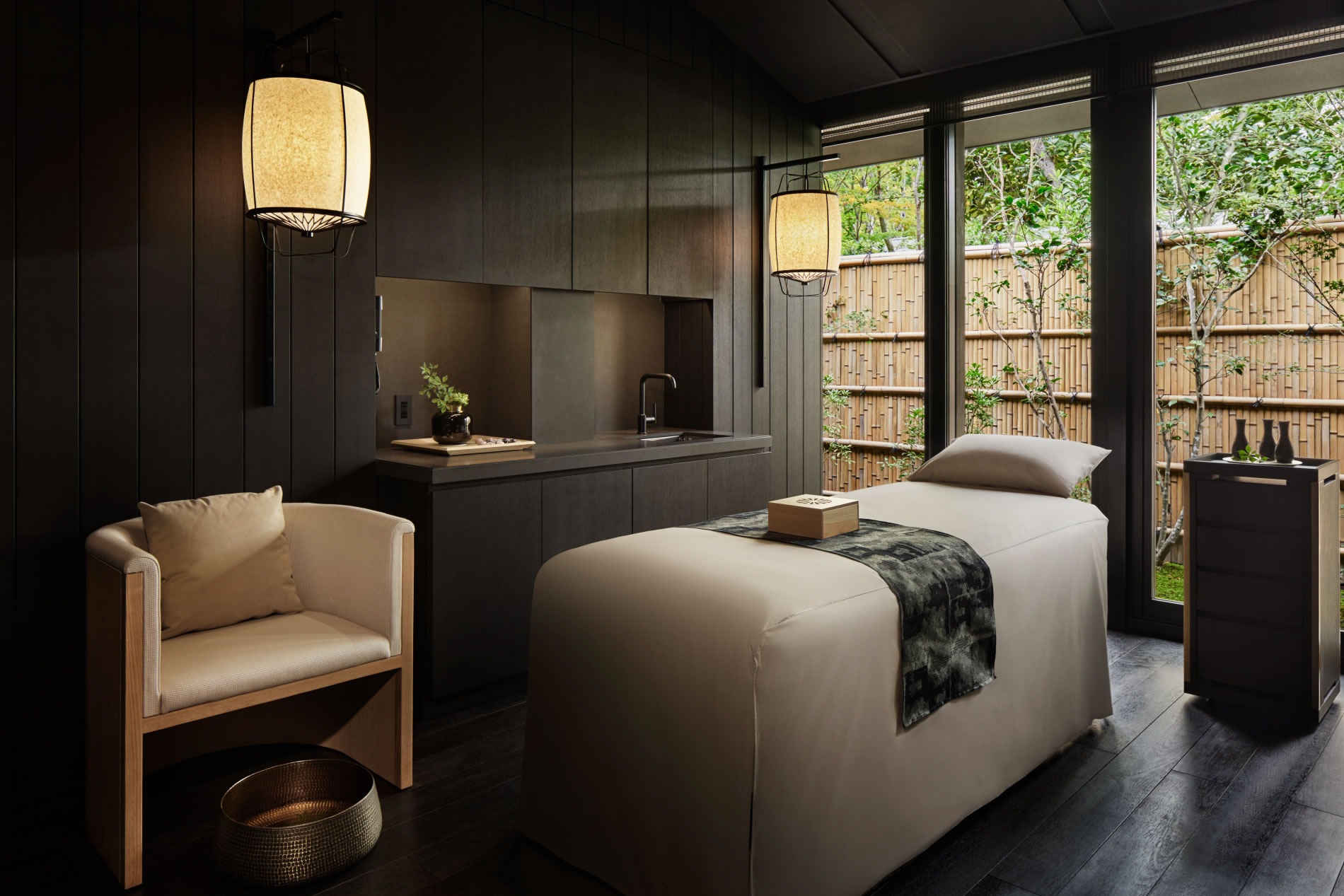
In summer, fireflies light up the garden at dusk, a tradition the Japanese call hotaru-gari, firefly hunting. The hotel also offers garden walks with its Cultural Ambassadors, forest bathing sessions, and electric bikes to reach the golden temple of Kinkaku-ji, just nearby, at your own pace.
It should be said as plainly as possible: this is not a hotel for everyone. There is no pool, no gym, no direct access to public transportation, and the more reserved reviews regularly hold that against it at this price point. It is also far from most of the tourist sites downtown, apart from the golden temple next door. Anyone coming to Kyoto to tick off the major sights in a few days may find the place impractical. Those who come to stop, on the other hand, rarely leave disappointed: this is a hotel designed for slowing down, not for scheduling.
And that is precisely why we recommend it. A hotel willing to do without a pool, a nearby city center, and every form of convenience, keeping only a forest and a silence, is not trying to please everyone. It speaks only to those who come looking for exactly that, and it is this rigor, more than the luxury itself, that makes it an exceptional address rather than simply a very good one. We happily pair it with time in Tokyo and a stop in Naoshima or the rice fields of Tohoku, so that this slowness acts as a counterpoint to the capital's energy rather than the trip's only rhythm. But the essential part is clear before you even leave: you do not go to Aman Kyoto to visit Kyoto. You go to step away from it.
« You do not go to Aman Kyoto to visit Kyoto. You go to step away from it. »
— More to explore